
How much a Rebuilt Title cuts a car’s value: how to estimate it and set your bid
A car with a Rebuilt Title usually sells for 20–40% less than the same car with a clean title. What drives the discount, how to value a specific car against the market, and how to work a maximum auction bid backwards from that price.
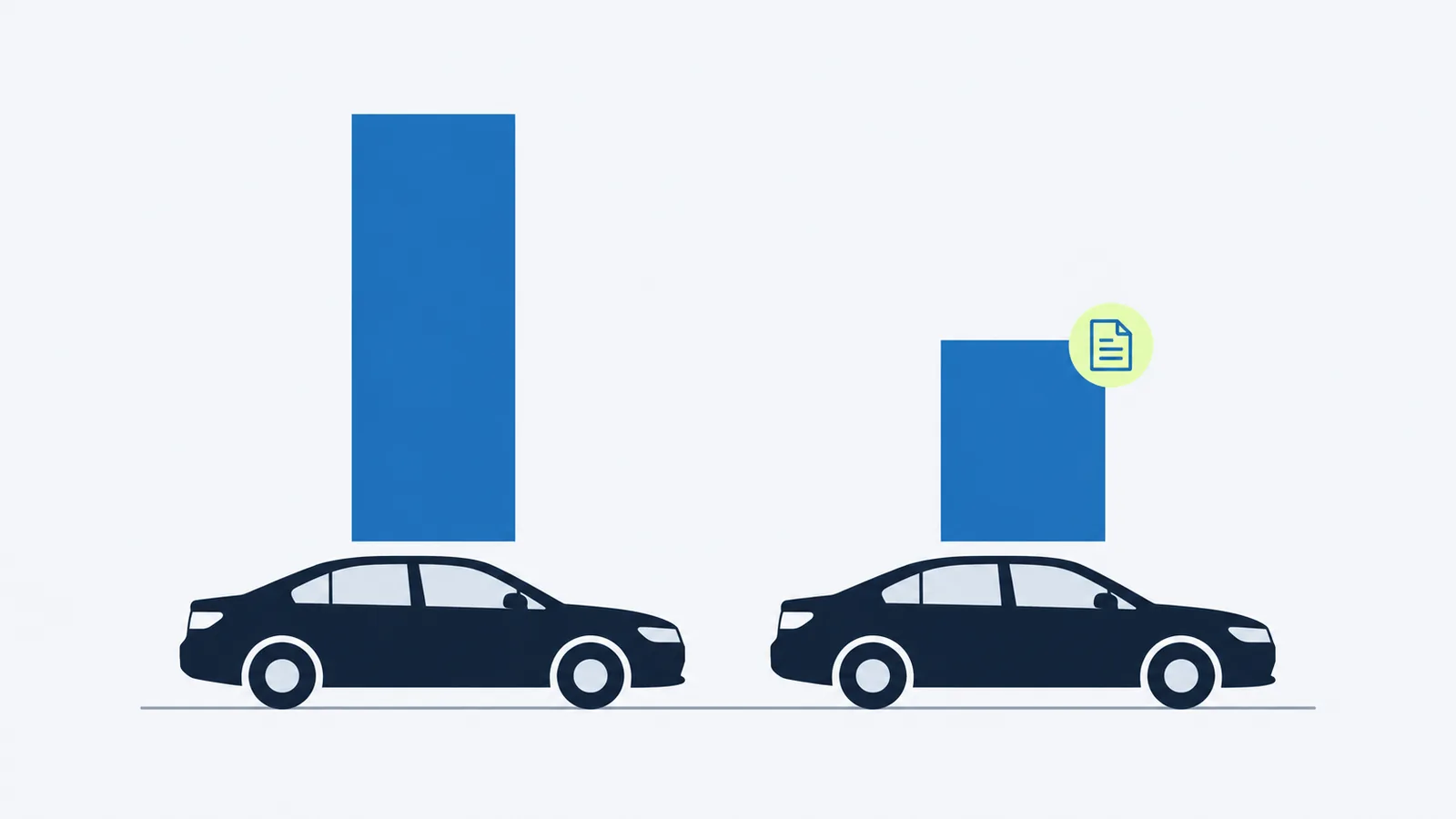
The short answer: a Rebuilt Title car usually sells for 20–40% less than the same car with a Clean Title. But that is a range, not a price, and for a dealer something else matters more: everything is worked out from that figure — what you can pay for the lot, what you can put into the repair, and what margin is left.
Below: what drives the discount, how to value a specific car, and how to turn the valuation into a maximum bid.
Why Rebuilt is worth less
Three reasons, none of them technical. The total-loss record stays in the VIN history for good. A buyer cannot verify the quality of someone else’s repair. And every subsequent buyer will discount for the same reasons, so the car is harder to sell on too. What Salvage and Rebuilt actually mean is in the guide to Salvage vs Rebuilt.
What drives the discount
| Factor | Smaller discount | Larger discount |
|---|---|---|
| Type of damage | Hail, theft recovery, cosmetic | Flood, fire, frame damage |
| Paperwork | Before-and-after photos, parts invoices, the inspection report | Nothing but the title |
| Model | Mass-market, cheap parts | Premium, where buyers pay for history |
| Age | An older car, where the title matters less | A new car, where the missing warranty shows |
| Market | The model is scarce | Plenty of Clean Title listings |
How to value a specific car
- 1Find the price of the same car with a Clean Title — year, trim, mileage — on the market where you will sell it. Real listings, not a model average.
- 2Apply the discount from the table above. Cosmetic damage with paperwork — closer to 20%; flood with no paperwork — 40% or more.
- 3Check against actual sales if you have access to them: what cars with the same history really sold for, not what they were listed at.
- 4Subtract time. Rebuilt takes longer to sell. A month on the lot is money, and it belongs in the estimate.
If the car is being imported from auction
For an importer the logic is the same with one adjustment: the destination’s registration document carries no US brand, but the car’s history is available to anyone by VIN — through Carfax and the sites that archive auction photos. A buyer who checks will see the auction lot and discount in exactly the same way. Price the resale from the Rebuilt level even when the local document is clean.
And the reverse: if you are the one buying an already-rebuilt car, a Carfax report shows how many times it was written off, and the damage codes show what the original damage was.
From resale price to maximum bid
The Rebuilt valuation is not an end in itself — it is the ceiling the bid is worked back from:
- 1Resale price with a Rebuilt history — by the method above.
- 2Minus your margin. The target one, not whatever is left.
- 3Minus repair, with a buffer for hidden damage.
- 4Minus customs — the calculator.
- 5Minus logistics and storage.
- 6Minus auction fees — by lot number.
- 7= Maximum bid. If it is below the lot’s current price, the lot is not yours.
The full version of this logic is in the guide to the landed cost of a US car.
NotedCar works the maximum bid backwards from the resale price — with real fees, freight and customs for every lot.
Start 14 days free