
How to track a car shipped from the US: stages, numbers and where to check

How to track a car from the US at every stage: from the auction yard to the port, in a container across the ocean and through customs. Which numbers you need — lot, VIN, container, bill of lading — where to look each one up, and how long each leg usually takes.
·3 min read
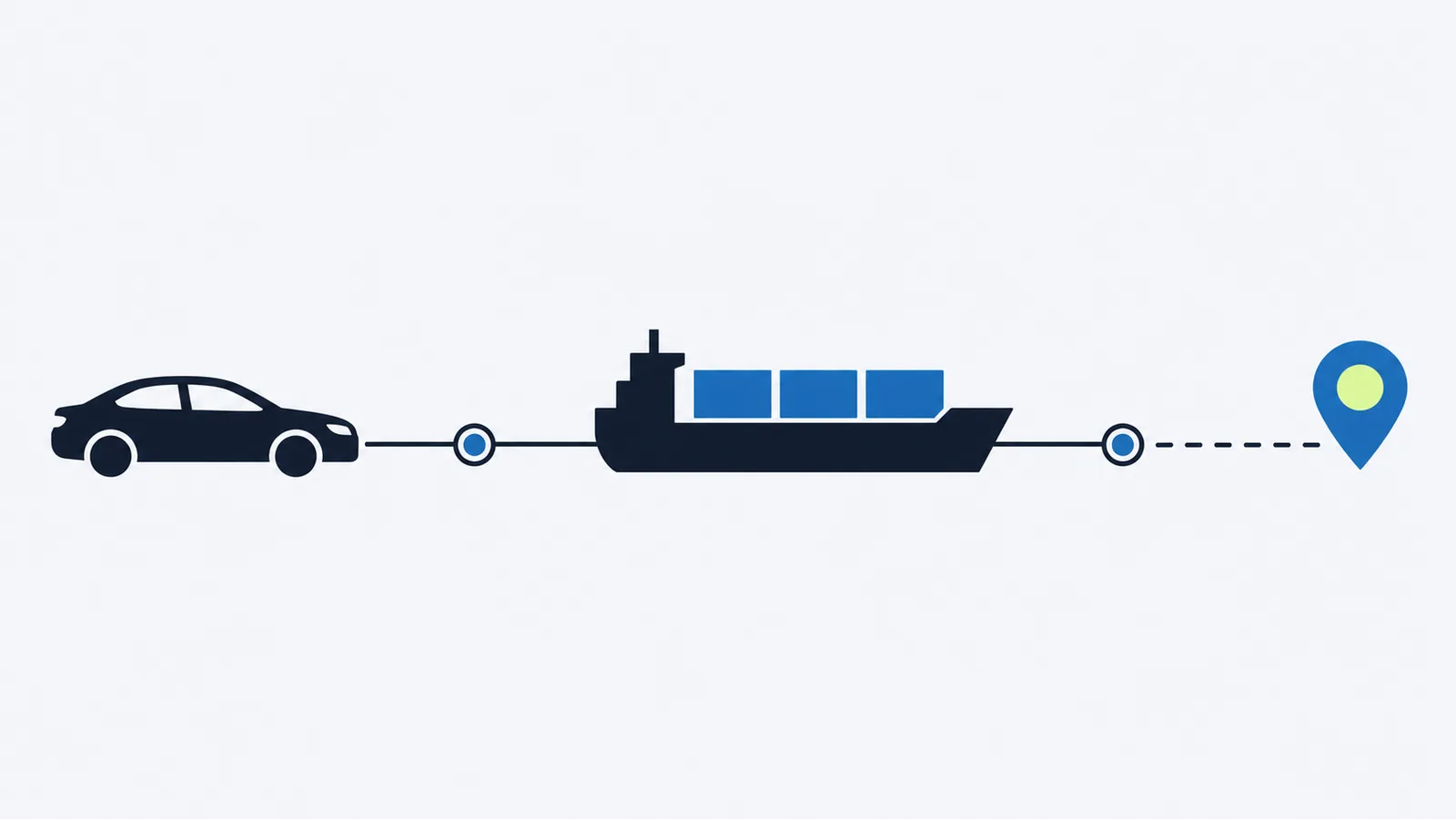
Car, cargo ship and destination pin on a route with tracking waypoints

The query “track my car from the US by VIN” has an awkward answer: there is no single tracker. The car passes through an auction, a trucking company inside the US, a port warehouse, a shipping line and customs, and each keeps its records under its own number. The VIN links them together, but only whoever has the car right now can show its status.

Below: the stages of the route, the number and the source for each, typical timings, and the signs that something has gone wrong.

The stages and where to track each one

StageNumberWhere to check
1. Auction yardLot numberYour Copart / IAAI account: payment, release status
2. Trucking to the portVINThe forwarder’s portal; confirmation of pickup from the yard
3. US port warehouseVINThe forwarder’s portal: arrival at the warehouse, photos, loading date
4. Loading into the containerContainer number, bookingThe forwarder; from here on, the shipping line’s site
5. OceanContainer number or bill of lading (B/L)The line’s tracker (MSC, Maersk, CMA CGM, Hapag-Lloyd, etc.); the vessel’s position by its name
6. Arrival portContainer numberThe line and the terminal: discharge, container release
7. Customs and deliveryVIN, declaration numberThe broker; then the carrier to the destination city
The container number and bill of lading only exist from stage 4 — before that, tracking is through the forwarder alone.

The numbers you need

  • Lot number — the auction’s identifier. Works while the car is at the yard.
  • VIN — the one number that travels with the car the whole way. It is what forwarders show status by in their portals.
  • Container number — four letters and seven digits, e.g. MSCU1234567. The shipping line shows port-to-port movement by it.
  • Bill of lading — the transport document for the shipment; its number also searches on the line’s site.
  • Vessel name — shows the position on a map, if you want to see where the container is right now.

How long each leg takes

LegTypical time
Pickup from the yard after payment2–10 days
Waiting at the port warehouse for loading1–3 weeks, depending on how fast the container fills
Ocean, US East Coast → Europe3–5 weeks
Ocean, West Coast → Europe6–8 weeks
Arrival port: discharge, deconsolidation3–10 days
Customs and delivery to the city1–2 weeks
Planning ranges. Every leg depends on the port, the line and the season.

In total, usually one and a half to three months from payment to customs clearance. Give the client a range rather than a date: one delay at loading shifts everything that follows.

Common delays and what they mean

  • The car has not left the yard. Usually no key, no release paperwork, or the trucker has no slot. Storage accrues daily; see what to do after winning.
  • The car is at the warehouse but not loading. A container is consolidated from several cars; a less common destination waits longer.
  • The car has arrived, the title has not. The document travels separately and often more slowly. Without it there is no customs clearance and no certification, while port storage is already running.
  • The container is under inspection. Customs can select containers for examination on either side of the ocean; that is days, sometimes weeks.

When it is twenty cars, not one

For a single car, the forwarder’s portal and the line’s site are enough. At volume the problem is different: five forwarders, three lines, different ports, and clients asking “where is my car” every day. Then each car’s status has to be a field on the deal, visible to the team and to the client — not an answer that has to be dug out of email every time. The full cost of the route and where margin leaks along it is in the guide to the landed cost of a US car.

NotedCar tracks the logistics of every deal — stage, port, documents — and shows the client their car’s status on its own page, without a call to the manager.

Start 14 days free

Frequently asked questions

Keep reading

How Copart works: buying a car as a foreign buyer

Who is allowed to bid at Copart, how much you need on deposit before the first bid, and where a broker fits. The auction’s mechanics from sign-up to a won lot.

EV customs in Ukraine in 2026: 20% VAT, €1 per kWh excise and worked examples

The VAT exemption ended on 1 January 2026. An electric car now costs a little over 20% of its value to clear — here is the formula and the numbers.

Copart and IAAI glossary: lot page terms and how to read the invoice

Every flag on a lot page means less than it sounds like. Here is what each one actually records — and what it does not promise.

Certifying a US car in Ukraine: first registration and the 2026 rules

A cleared car still cannot be registered. Between customs and plates sit certification, a lighting conversion and the pension fund fee.

Certificate of Destruction: what it means and whether the car can be exported

The cheapest lots at auction often carry this document. Legally it is no longer a vehicle but a set of parts — and that changes everything.

Salvage vs Rebuilt title: the difference and what it does to the price

Salvage is a car an insurer wrote off. Rebuilt is the same car after repair and inspection. The gap between them is weeks, money and a question of trust.

After winning a Copart lot: payment deadline, storage, late fees and relist

The clock starts when the hammer falls. Three business days to pay, then a late fee, then storage every day — and eventually your lot is sold again at your expense.

How much a Rebuilt Title cuts a car’s value: how to estimate it and set your bid

The 20–40% rule is only the start. The real discount depends on the damage type, the paperwork and the model — and it decides how much you can pay for the lot.

Importing a US car to Georgia in 2026: the 1.5 and 4.5 GEL excise, import tax and worked examples

Since April 2026 a car’s age matters more than its price in Georgia: the seventh year triples the excise. The formula, examples and what it does to your bid.

Importing a US car to Kazakhstan in 2026: 15% duty, 16% VAT, the recycling fee and the 500 MRP registration

In Kazakhstan the biggest charge is not duty but first registration: 500 MRP for a car over three years old. Here is how that changes which lot you pick.

Importing a US car to Kyrgyzstan in 2026: the EAEU flat rates in euro per cm³, with examples

In Kyrgyzstan the bill is computed from cubic centimetres, not price — and a car’s fifth year doubles the rate. The full table and three examples.

Importing a US car to Uzbekistan in 2026: 40% + $3 per cm³ duty, and why to run the numbers first

On a car over three years old, duty alone in Uzbekistan exceeds the price of the car. Here is the formula and the categories where importing still works.

Copart and IAAI fees in 2026: every buyer charge and how to price a lot properly

Your bid is roughly 75–85% of what you actually pay the auction. Here is every Copart and IAAI charge, what moves it, and how to price a lot before you bid.

Landed cost of a US car: from the auction bid to customs clearance

The auction bid is roughly half of what you will pay. Here is the other half — and how to work your maximum bid backwards from the margin you need.

Pure Sale, On Approval and Seller's Reserve: Copart and IAAI sale statuses explained

Winning the auction and buying the car are not the same thing. Here is what every Copart and IAAI sale status means for your bid.

US car titles explained: Clean, Salvage, Rebuilt and Junk — and what can actually be exported

The title is the document that decides everything: whether the car leaves the country, whether it clears customs, and what the deal really costs.

Copart and IAAI damage codes: which ones actually destroy your margin

Translating a damage code is easy. Knowing which ones cost a hundred dollars and which close the deal before you bid is the part that matters.

How to check a US car's history by VIN: Carfax, AutoCheck and their blind spots

A VIN report is the cheapest way to avoid buying someone else's problem. But its limits deserve as much attention as its contents.

Window sticker by VIN: how to check factory equipment on a US car

An auction listing gives you three lines. The factory sticker tells you exactly how the car left the line and what it cost when new.

Price the whole lot before you bid

NotedCar rolls auction fees, logistics and customs into one number, flags the sale type and title risk, and keeps every client in one place.