
Importing a US car to Kyrgyzstan in 2026: the EAEU flat rates in euro per cm³, with examples
How customs clearance of a US auction car works in Kyrgyzstan for a private importer: the EAEU flat rates in euro per cm³ by age and engine size, 48–54% for cars under three years old, worked examples and what it means for choosing a lot.
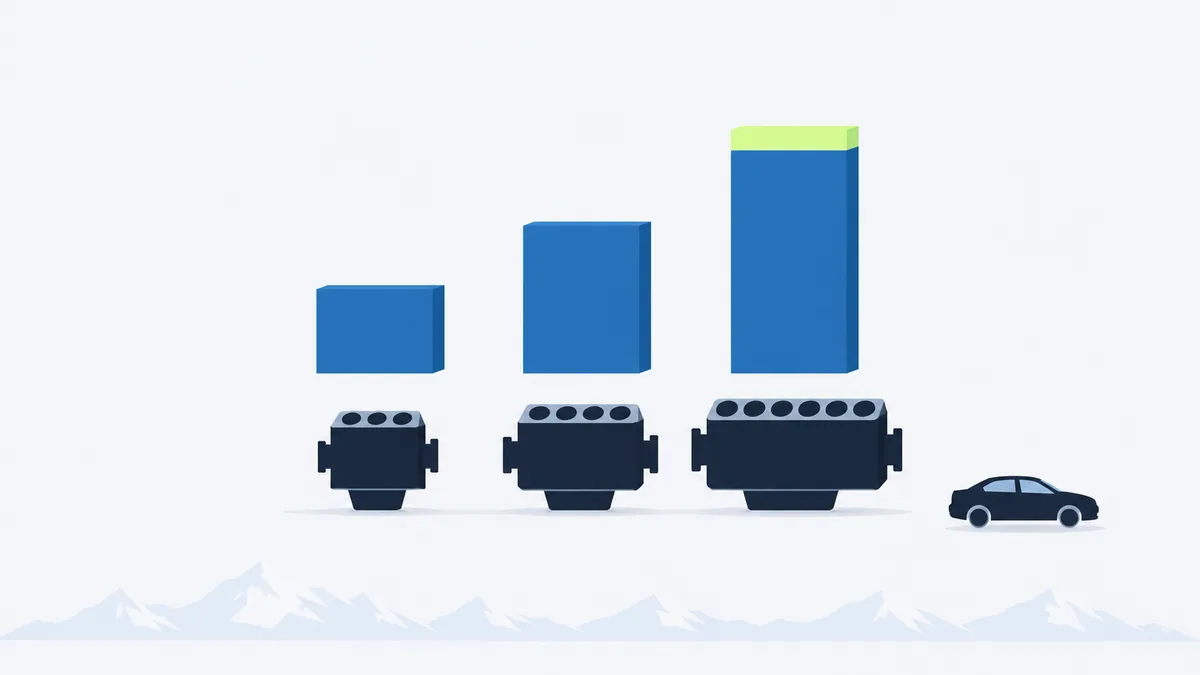
Kyrgyzstan is a member of the EAEU, so a private person importing a car for personal use does not pay duty, excise and VAT separately but a single flat rate — the aggregate customs payment. For cars over three years old it is computed from engine size alone.
That makes the calculation simple — and merciless to large engines. Below is the full rate table and what follows from it for your bid.
Flat rates for private importers
| Engine size | Car 3 to 5 years old | Car over 5 years old |
|---|---|---|
| Up to 1,000 cm³ | 1.5 euro per cm³ | 3.0 euro per cm³ |
| 1,000–1,500 cm³ | 1.7 euro per cm³ | 3.2 euro per cm³ |
| 1,500–1,800 cm³ | 2.5 euro per cm³ | 3.5 euro per cm³ |
| 1,800–2,300 cm³ | 2.7 euro per cm³ | 4.8 euro per cm³ |
| 2,300–3,000 cm³ | 3.0 euro per cm³ | 5.0 euro per cm³ |
| Over 3,000 cm³ | 3.6 euro per cm³ | 5.7 euro per cm³ |
For cars under three years old the payment is based on value: 54% up to a value of 8,500 euro and 48% above it — but never less than a per-cm³ minimum that rises with price, from 2.5 euro (up to 8,500 euro) to 20 euro per cm³ (over 169,000 euro).
Examples
| Engine | 3 to 5 years old | Over 5 years old |
|---|---|---|
| 1.5 L (1,498 cm³) | 1,498 × 1.7 = 2,547 euro | 1,498 × 3.2 = 4,794 euro |
| 2.0 L (1,998 cm³) | 1,998 × 2.7 = 5,395 euro | 1,998 × 4.8 = 9,590 euro |
| 2.5 L (2,487 cm³) | 2,487 × 3.0 = 7,461 euro | 2,487 × 5.0 = 12,435 euro |
Companies and electric vehicles
A company importing a car for resale clears it under the general procedure: import duty under the EAEU Common Customs Tariff and VAT are charged separately on the customs value. Which regime is cheaper depends on price and engine size — an expensive car with a small engine usually does better on the flat rate, a cheap one with a large engine the other way round.
Electric vehicles are exempt from import duty within a quota. Check the conditions and the remaining quota before buying, not after.
What this changes in your bid
- Price it from cubic centimetres. The payment is known before the auction — the year and engine size on the lot card are enough.
- The 3-to-5-year window is the sweet spot for auction cars: the lower rate, and no longer a percentage of value.
- Small engines win twice: fewer cubic centimetres and a lower rate on each.
- A damaged car pays the same as an intact one, so a cheap wrecked lot with a big engine is a trap.
- The route usually runs by sea to Poti and onward in transit.
- Auction fees — get the exact amount from a lot number, and check the title before you bid.
Price the Copart and IAAI fees from a lot number and check whether a car with that title can be exported — free, no account needed.
Calculate auction fees