How Copart works: buying a car as a foreign buyer
How the Copart auction works for a buyer outside the US: registration, membership and deposit, when you need a broker, how bidding runs and what happens after you win. The mechanics, without the sales pitch.
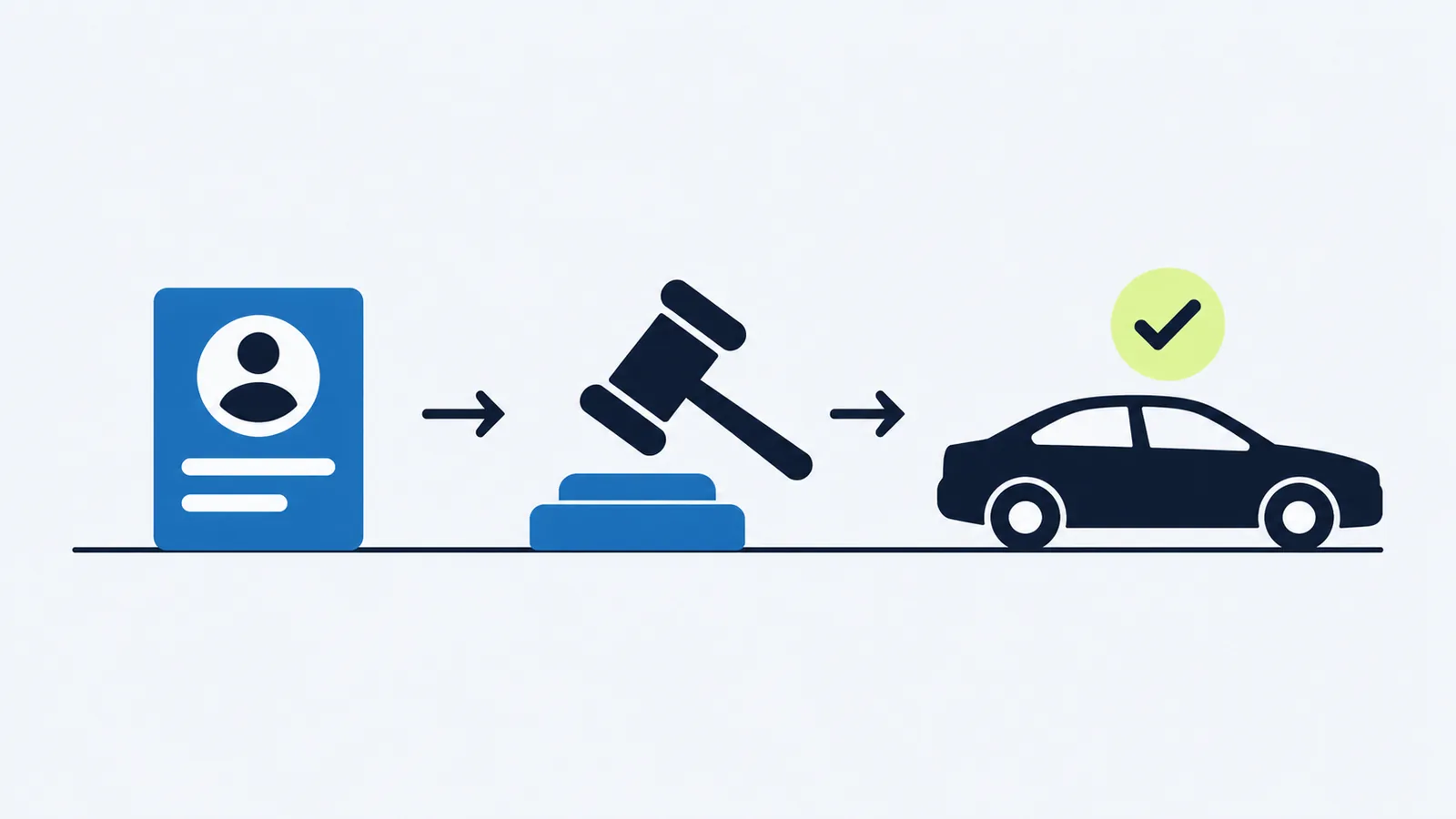
Copart is an online auction where insurers, banks, rental and leasing fleets and dealers sell vehicles. It is a public company, in business since 1982, with yards in the US, Canada and Europe. A buyer outside the US can buy there too — the only question is whether directly or through a broker.
Below are the mechanics without the marketing: what you need before a first bid, which lots are open to you, how bidding runs, and where newcomers lose money.
What Copart is and where the cars come from
Most lots are insurance vehicles: the car was declared a total loss, the insurer paid the owner and is selling what remains. The rest are repossessions, ex-rental and ex-lease cars, and dealer trade-ins. The seller determines more than condition — it determines whether your bid will be accepted at all, which is covered in the guide to sale types.
Who can buy
Anyone can register, including non-US residents: you need a government-issued ID and a paid membership. But having an account and being allowed to bid on a particular lot are different things. In many states some vehicles may only be sold to a licensed dealer, dismantler or exporter, and that depends on the state and the title type.
- “No license required” — open to any member.
- Licence-required lots — you need a business licence on file with Copart, or a broker.
- The restriction is shown on the lot page — check it per vehicle, not “per state”.
Membership, deposit and buying power
Copart has a free guest level (you can browse but not bid) and paid membership tiers. The higher tier lets you bid on several lots at once and on more expensive vehicles. At the time of writing annual membership ran from roughly $99 to $249, and the higher tier also required a refundable deposit — always take the current figures from your own account.
Buying power is tied to your deposit: to bid up to an amount X you need roughly 10% of it on account. A deposit is not a fee — it is returned as long as you owe nothing.
When you need a broker
A broker is a company holding US licences that bids in its own name on your instruction. You need one in two cases: the lot requires a licence you do not have, or you would rather not handle US payment and paperwork yourself.
| Own account | Through a broker | |
|---|---|---|
| Lots available | Only those with no licence requirement | Practically all |
| Auction fees | At your own tier | At the broker’s tier |
| Extra cost | Membership | Broker’s fee per vehicle |
| Deposit | Held by Copart | Held by the broker, on its terms |
| Documents | In your name | In the broker’s name, then reassigned or exported |
How bidding runs
- 1Preliminary bidding. Before sale day you can leave a maximum. The system raises your bid only one increment above the next bidder.
- 2Live auction. On sale day the lot crosses a virtual lane for a matter of seconds. The highest preliminary bid becomes the opening bid.
- 3Result. A winning bid is not always a purchase: on lots sold On Approval the seller can decline.
Auction fees come on top of any bid — usually 15–25%, more on cheap lots. The Copart fee calculator gives the exact figure by lot number, and the guide to Copart and IAAI fees explains what it is made of.
After you win
The clock starts immediately: you have a few business days to pay, then a late fee, storage and eventually a relist at your expense. The deadlines and amounts are in the guide to what to do after winning a lot.
Copart in your own language
The interface language can be changed in the site header, but lot data stays in English: damage codes, title types, sale statuses, flags such as Run and Drive or Enhanced Vehicles. Those are what set price and risk, so they are worth knowing in the original — that is what the Copart glossary is for.
NotedCar shows the sale type, the title risk and the full landed cost of a lot before you bid — and runs the deal after you win.
Start 14 days free